What Happens If Your Passport Gets Wet? When a Damaged U.S. Passport Must Be Replaced
Edited by Bobby Hess | FreePassportSnap.com
Author: FreePassportSnap
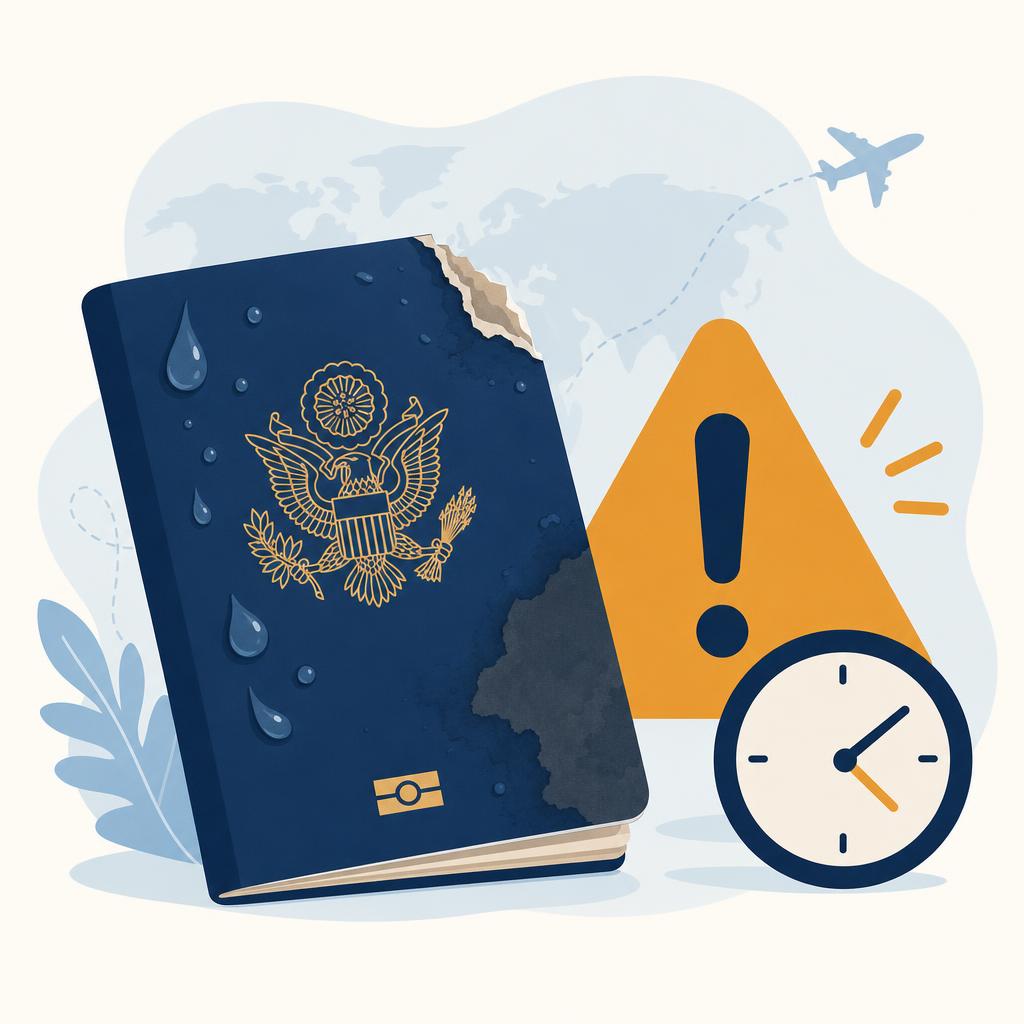
Your passport went through the washing machine. A drink spilled inside your travel bag. Your passport got soaked in the rain. Or maybe the cover looks fine, but several pages are wrinkled or stained. Can you still travel with it?
The answer depends on the extent of the damage. Minor everyday wear does not necessarily mean you need a new passport, but significant damage — including certain types of water damage — can make a U.S. passport unusable for international travel.
If you're unsure whether your passport is simply worn or officially considered damaged, here's what you need to know before heading to the airport.
Is a Wet Passport Still Valid?
Not necessarily. The U.S. Department of State specifically lists water damage, including stains or mold, as passport damage. A damaged passport cannot be used for travel and needs to be replaced.
The important distinction is between actual damage and normal wear and tear. A tiny bend from carrying your passport isn't treated the same way as pages that have become stained, moldy or seriously damaged by water.
What Counts as a Damaged U.S. Passport?
According to the U.S. Department of State, examples of passport damage include:
- Water damage
- Water stains
- Mold
- Significant tears
- Unofficial markings on the biographical information page
- Missing visa pages
- Torn visa pages
- A hole punched through the passport
- Other major physical damage
If your passport has significant damage, don't assume that because you can still read your name and see your photograph, the passport is acceptable for international travel. Airlines and border authorities may reject damaged travel documents.
What Is Normal Passport Wear and Tear?
There's an important difference between passport damage and ordinary wear. The State Department says examples of normal wear and tear include a slight bend from carrying the passport in your pocket, visa pages fanning from repeatedly opening and closing the passport, and slight fraying around the edges. Normal wear and tear generally does not require you to replace your passport.
Think about the difference this way: slightly worn from normal use is probably normal wear, while wet, moldy, significantly torn, missing pages or seriously damaged is a sign you should replace it.
My Passport Went Through the Washing Machine — What Should I Do?
A passport accidentally going through a washing machine should be taken seriously. Even if it dries and appears readable, water can affect passport pages, security features, printing, lamination, personal information, visa pages, and electronic passport components.
Don't try to make a badly water-damaged passport look new. If the passport has significant water damage or staining, follow the State Department's damaged-passport replacement process. The safest approach is to replace the damaged passport before international travel, rather than discovering at airline check-in that it isn't acceptable.
Can I Dry a Wet Passport and Keep Using It?
Drying a passport doesn't automatically make it acceptable for travel. The question isn't simply whether the passport is currently dry — it's whether the water caused actual damage. For example, a passport that now has substantial staining, mold, damaged pages or other significant deterioration may need replacement even after it has completely dried.
Don't try to repair damaged pages with tape, glue or other materials, and don't alter passport pages or attempt to digitally or physically reconstruct damaged information. If the damage falls within the State Department's definition of passport damage, replace the passport.
Can I Travel With a Water-Damaged Passport?
You should not attempt international travel with a significantly damaged passport. The State Department warns that airlines may deny boarding and travelers may encounter difficulties traveling abroad when a passport is damaged. This is especially important if you're about to leave on an international trip — getting through an airline's online check-in process doesn't guarantee that the physical passport will be accepted when it is inspected.
A passport may be examined by airline personnel, airport officials, immigration officers, border authorities, or foreign government officials. Don't gamble an expensive international trip on a passport you already know is seriously damaged.
Can an Airline Refuse a Damaged Passport?
Yes. The U.S. Department of State specifically warns that airlines may deny boarding if your passport is damaged. An airline has to ensure passengers have appropriate travel documents for their destination. Even if you believe the damage is cosmetic, an airline employee or border official may view it differently. If the damage is significant enough that you're questioning whether the passport will be accepted, address the problem before your departure date.
What If Only the Passport Cover Is Bent?
A bend does not automatically make a passport damaged. The State Department considers a normal bend from carrying a passport in your pocket an example of ordinary wear and tear. Likewise, slight edge fraying and fanning of visa pages can occur through normal use.
That's very different from missing pages, significant tears, water stains, mold, unofficial markings on the data page, or hole punches. You don't need to replace an otherwise usable passport merely because it no longer looks brand new.
What If My Child Drew in My Passport?
This can potentially be a serious problem. The State Department specifically identifies unofficial markings on the biographical information page as passport damage. The biographical or data page is the page containing important personal information such as your photograph and identifying details.
If your passport has been drawn on, written in or otherwise altered, don't simply erase or cover the markings. Check with the U.S. Department of State and replace the passport when the markings constitute damage.
What If a Visa Page Is Torn?
A missing or torn visa page is considered passport damage. This is different from a visa page that has simply become slightly bent or worn through normal use. Never intentionally remove pages from a passport. If a visa page has been torn out or is significantly damaged, you should replace the passport before traveling.
What About Souvenir Passport Stamps?
Be careful about putting unofficial or novelty stamps into a U.S. passport. The State Department advises passport holders not to add unofficial stamps or markings. A passport isn't a travel scrapbook. Use a separate travel journal or souvenir passport if you want to collect novelty stamps from tourist attractions, and keep your actual U.S. passport reserved for legitimate government and border-control use.
How Do You Replace a Damaged U.S. Passport?
A significantly damaged U.S. passport generally cannot be handled as a standard passport renewal. The State Department instructs applicants replacing a damaged passport to apply in person for a new passport. You'll generally need:
- Your damaged passport
- A signed statement explaining the damaged or mutilated condition
- Form DS-11
- Required supporting documents
- A new passport photo
- Applicable passport fees
The damaged passport itself should be submitted with the application.
Use the official U.S. Department of State website for current instructions — see "Additional application requirements" for the damaged-passport steps:
travel.state.gov — Apply in Person (Damaged Passport Requirements)Avoid relying on an unofficial website to determine which passport form you need or where you should submit sensitive personal information.
Do I Need a New Passport Photo?
Yes. When applying for a replacement passport using Form DS-11, you'll need to provide a passport photo meeting current U.S. passport photo requirements. Your photograph must accurately represent your current appearance and meet the State Department's specifications.
Common passport photo problems include incorrect dimensions, poor lighting, shadows, incorrect background, low image quality, improper head positioning, and filters or digital alterations. Preparing the photo correctly can help prevent another unnecessary delay in your replacement application.
What If My Passport Was Damaged in a Natural Disaster?
There is a special exception worth knowing about. If your passport was lost or damaged because of certain federally designated major disasters, you may qualify for a passport fee waiver. Not every storm, flood, fire or other emergency qualifies — the State Department maintains a list of eligible disasters and applicable deadlines. If you believe your passport was damaged during a qualifying disaster, check the official State Department disaster passport page before paying for a replacement.
What If I'm Traveling Very Soon?
Don't wait until you're standing at the airport. If you have not yet applied and you're traveling internationally within 14 calendar days, the State Department has an urgent travel process through passport agencies and centers. Appointments are required, and appointment availability isn't guaranteed.
If you've already submitted a passport application and you're traveling within 14 days without receiving your passport, contact the National Passport Information Center for current instructions. Always use the official State Department guidance because urgent passport procedures can change.
Should I Report a Damaged Passport as Lost or Stolen?
A damaged passport isn't automatically the same thing as a lost or stolen passport. If you still physically possess the damaged passport, follow the damaged passport instructions. If your passport is actually lost or stolen, the process is different — the State Department recommends reporting a valid lost or stolen passport immediately to protect against identity theft. Once you report a valid passport lost or stolen, it is cancelled, and even if you later find it, you cannot use it for international travel.
How to Protect Your Passport From Water Damage
A little prevention can save you the cost and hassle of replacing a passport. When traveling:
- Keep your passport in a dry, secure location
- Avoid storing it next to water bottles or liquids
- Don't leave it in clothing that may go through the washing machine
- Protect it from rain and excessive humidity
- Don't store it long-term in a damp bathroom
- Keep it away from children and pets
- Don't leave it near extreme heat
- Never add unofficial stamps or markings
A protective travel holder can also help protect your passport while you're carrying it.
Damaged Passport vs. Normal Wear: Quick Guide
Usually normal wear: slight bends, minor edge fraying and normal fanning of pages from regular use.
Potentially serious damage: water stains, mold, major tears, missing pages, torn visa pages, unofficial markings on the data page, hole punches and other significant physical damage.
When in doubt, don't wait until the day of your flight to find out whether your passport is acceptable.
The Bottom Line
If your passport gets slightly bent or shows ordinary signs of use, you don't necessarily need to replace it. But significant water damage, stains, mold, major tears, missing pages or unofficial markings can make a U.S. passport unsuitable for international travel.
If your passport is damaged: don't attempt to alter or repair it, don't assume an airline will accept it, review the current requirements at travel.state.gov, prepare Form DS-11 and the required documents, obtain a new compliant passport photo, bring your damaged passport, include a signed statement explaining the damage, and apply in person as directed by the State Department.
Taking care of the problem before your trip is much easier than finding out at the airport that your passport isn't acceptable.
Always verify current requirements directly with the State Department:
travel.state.gov — Official U.S. Passport Photo RequirementsFrequently Asked Questions
Can I travel if my passport got wet? If the passport has significant water damage, you should replace it before traveling. The State Department specifically identifies water damage, including stains and mold, as passport damage.
Is a slightly bent passport considered damaged? Generally, no. A normal bend from carrying a passport in your pocket is an example of ordinary wear and tear.
Does a water stain make a passport invalid? Water stains are specifically included in the State Department's examples of passport damage. If your passport has water staining, follow the government's damaged-passport guidance rather than assuming it is safe to travel with it.
Can I renew a damaged passport normally? A significantly damaged passport generally isn't eligible for the standard renewal process. The State Department instructs applicants to apply in person using Form DS-11.
Do I need to submit my damaged passport? Yes. When replacing a damaged passport, the State Department instructs you to submit the damaged passport along with a signed statement explaining its condition.
What if pages are missing from my passport? Missing or torn visa pages are considered passport damage. You should replace the passport.
Can I tape a torn passport page? Don't attempt to repair or alter a damaged passport yourself. Follow the State Department's instructions for replacing a damaged passport.
What happens if I put a souvenir stamp in my passport? The State Department advises against unofficial novelty or souvenir stamps. Unofficial markings can cause problems during travel, particularly when they affect passport pages or security information.
Can an airline refuse to let me board with a damaged passport? Yes. The State Department warns that a damaged passport may be rejected by airline or border officials and can delay your travel.
Where should I get official information about a damaged U.S. passport? Use the U.S. Department of State's official passport website at travel.state.gov for current passport application and replacement instructions.
With FreePassportSnap.com, you can prepare a new compliant passport photo from home while you gather your replacement application — no watermark, no registration.
Create Your Free Passport Photo →Previous
Vietnam Travel Guide 2026: Passport, E-Visa, Scams & Trip Planning
Next
What Is the Six-Month Passport Rule?
You Might Also Like
16 and 17 Year Old Passport Renewal: How to Apply and Why the Rules Are Different
Turning 16 doesn't automatically mean you can renew your passport the normal way. The key is when your current passport was issued — here's exactly what to do.
Can You Travel While Your Passport Renewal Is Processing?
Can you travel internationally after submitting a U.S. passport renewal? Learn whether your old passport remains usable.
Passport Expired While You Are Overseas: What Should You Do?
U.S. passport expired while abroad? Learn why you should contact the nearest U.S. embassy or consulate and what to do before your return trip.