Switzerland Travel Guide 2027: Passport Requirements, Best Places, Train Travel, Costs and Scams
Edited by Bobby Hess | FreePassportSnap.com
Author: Free Passport Snap Editorial Team
Updated October 26, 2026 | For American tourists planning a 2027 Swiss vacation
Switzerland combines mountain scenery with remarkably convenient rail travel. In one trip you can stroll through Lucerne, ride a scenic train into the Alps, explore Lauterbrunnen's waterfalls and watch the Matterhorn glow above Zermatt. The essential planning details are less photogenic: passport validity, the Schengen 90-day rule, changing European border systems, mountain-weather risk and a travel budget that fits Swiss prices.
2027 entry alert: Switzerland is not an EU member, but it is in the Schengen Area and participates in its entry rules. The EU's Entry/Exit System (EES) is now operating. ETIAS was still not accepting applications on October 26, 2026, though the EU had expected a late-2026 launch. Check the official ETIAS portal for your particular 2027 dates. Be especially wary of paid websites offering premature 'approval.'
Switzerland entry requirements for U.S. citizens
- Tourist visa — What Americans should know: Generally not required for stays of less than 90 days; the standard Schengen visitor limit is 90 days in any rolling 180-day period.
- Passport validity — What Americans should know: Important: The U.S. State Department's Switzerland page explicitly says at least six months' validity from the date of entry and warns this is strictly enforced. Plan to meet that guidance.
- Passport issue date — What Americans should know: Schengen rules generally require a passport issued within the preceding ten years.
- Documents — What Americans should know: Be prepared to explain your itinerary and show accommodation, funds and onward or return travel if asked.
- EES — What Americans should know: Electronic entry/exit registration and possible biometric collection at the external Schengen border.
- ETIAS — What Americans should know: Check whether authorization is required for 2027; the published standard application fee is €20 once the system launches, subject to exemptions.
- Currency — What Americans should know: Swiss franc (CHF), not the euro. Cards are widely accepted, but keep modest local cash when useful.
Why the passport warning matters: Broad Schengen guidance often discusses three months beyond departure. However, the current U.S. State Department destination guidance for Switzerland specifically states six months from entry. For a U.S. traveler, follow the more cautious Switzerland-specific instruction and renew if needed before buying nonrefundable tickets. Entry remains at the discretion of border authorities.
If your itinerary includes France, Italy, Germany or Finland, those days normally count in the same shared Schengen 90/180 total. A train trip across a Schengen internal border does not reset the clock. Visa, work and residence rules differ for other nationalities and purposes of travel.
What is new for Switzerland travel in 2027?
1. EES is operational. Schengen's digital Entry/Exit System was fully deployed at external participating border crossings on April 10, 2026. Arriving from outside Schengen may involve biometrics and an electronic entry record. Arriving from another Schengen country usually does not mean an additional external-border EES check.
2. ETIAS may affect 2027 visa-free visitors. It was not yet open for applications at the last review on October 26, 2026. EU planning has referred to a late-2026 start with subsequent transition/grace arrangements. Those arrangements depend on the official activation timeline. If your travel date is in 2027, check again near departure instead of relying on third-party deadlines or payment requests.
3. Confirmed 2027 cultural dates can shape an itinerary. Zurich's Sechseläuten spring festival is listed for April 19, 2027, and the Verbier Festival of classical music is listed for July 15–August 1, 2027. Event schedules may still change; reserve lodging early in festival areas and check organizers before purchasing nonrefundable tickets.
4. Ticket deals and mountain operations change by season. A train pass, mountain cable car timetable or gondola promotion published for 2026 is not automatically a 2027 offer. Compare current passes at SBB and confirm mountain transport openings for your exact dates.
The best time to visit Switzerland
- April–May: Spring cities, lakes and blossoms. Many high-altitude hiking trails remain snow-covered, and some mountain lifts close for maintenance.
- June–September: Excellent for scenic trains, lake boats and hiking at suitable elevations; July and August are busy and costly.
- Late September–October: Autumn color, quieter stays in some regions and often pleasant lower-elevation walks. Daylight shortens and some seasonal lifts close.
- December–March: Ski resorts, Christmas markets and snowy mountain settings. Skiing and lift passes add substantially to costs.
In the Alps, weather varies sharply by altitude. A warm afternoon in Zurich does not mean a mountain summit is warm, and a route described as an easy summer hike can be dangerous under snow or ice.
Best places to visit in Switzerland
Zurich: an easy international gateway
Explore the Old Town, Lake Zurich's promenade, museums and the riverside streets around the Limmat. Zurich is practical for a first night after flying in and offers excellent rail links to the rest of the country. To save money, consider spending only one or two nights in the city before traveling to smaller bases.
Lucerne: lakes and mountain views
Lucerne's Chapel Bridge, old streets and waterfront are classic first-trip stops. A lake cruise and excursions toward Mount Rigi or Pilatus can fill a second day. Review mountain-ticket coverage carefully: a general train pass may discount an excursion without covering every segment.
Interlaken, Lauterbrunnen and Grindelwald: the Bernese Oberland
Interlaken is a transport hub between Lakes Thun and Brienz. Lauterbrunnen offers striking valley scenery, while Wengen, Mürren and Grindelwald make excellent bases for marked walks and mountain viewpoints. Popular high-altitude excursions such as Jungfraujoch are expensive and weather-sensitive; check forecasts before committing.
Zermatt: the Matterhorn experience
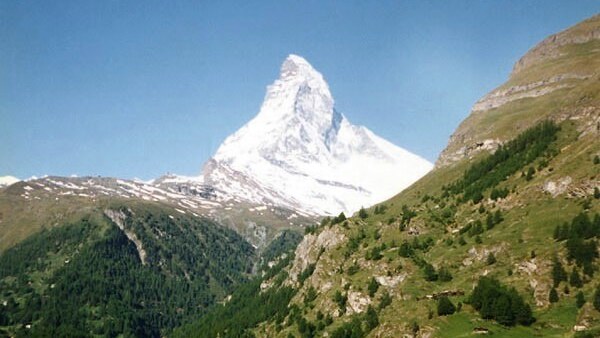
Zermatt is a car-free mountain resort served by rail, renowned for its Matterhorn views, walks and mountain trains. Stay two nights if possible: clouds can obscure the summit for an entire day. Book rail, lodgings and major excursions well in advance in peak periods.
Bern, Montreux and Geneva: culture beyond the mountains
Bern's medieval Old Town rewards a slow walking day. Montreux provides Lake Geneva scenery and access to Château de Chillon. Geneva offers international institutions, the Jet d'Eau and museums. These destinations work especially well if entering or departing from western Switzerland.
A realistic 9-day Switzerland itinerary by train
- 1 — Where and what to do: Arrive in Zurich; rest and walk the Old Town.
- 2 — Where and what to do: Train to Lucerne; explore Chapel Bridge and the lakefront.
- 3 — Where and what to do: Lucerne: a lake cruise or Mount Rigi, weather permitting.
- 4 — Where and what to do: Scenic rail connection toward Interlaken; settle into your base.
- 5 — Where and what to do: Lauterbrunnen Valley, Wengen or Mürren.
- 6 — Where and what to do: Grindelwald or a high-mountain excursion, choosing based on weather and cost.
- 7 — Where and what to do: Train to Zermatt; evening village walk and Matterhorn views.
- 8 — Where and what to do: Zermatt: Gornergrat or valley walks; keep an alternative for clouds or wind.
- 9 — Where and what to do: Travel to your departure airport with a generous rail-to-flight buffer.
Add two or three days for Montreux, Bern, Geneva or a panoramic rail trip. Avoid planning several distant Alpine summits in one day: transfers, lift queues and weather changes can turn an ambitious schedule into an expensive rush.
Switzerland trains: Swiss Travel Pass vs. Half Fare Card
Switzerland is often easier without a rental car. Use the SBB official timetable and ticket app for train and bus connections, and compare these visitor options:
- Swiss Travel Pass — Usually worth considering if...: You plan frequent train, bus and boat travel on multiple consecutive days plus museums. — Watch for...: Panoramic-train reservations and many mountain excursions still cost extra or are only discounted.
- Swiss Half Fare Card — Usually worth considering if...: You expect a mixture of ordinary rail and expensive mountain journeys and can compare pay-as-you-go fares. — Watch for...: It does not mean unlimited free travel; purchase the reduced-price tickets that apply.
- Individual tickets — Usually worth considering if...: Your itinerary is short, fixed or concentrated in one region. — Watch for...: Buying late or changing plans may affect fares and restrictions.
The Swiss Travel Pass is offered in 3-, 4-, 6-, 8- and 15-day consecutive versions, subject to current product terms. Some scenic services, including the Glacier Express and Bernina Express, require reservations or supplements even with a pass. Use SBB's fare comparison rather than assuming the most expensive pass saves money.
Driving tip: If you rent a car for Swiss motorways, verify that the vehicle has the required motorway vignette. Switzerland's customs authority currently lists the official vignette at CHF 40 and warns about fake e-vignette websites. Use the official Swiss government purchase page, not a sponsored imitation. Check the current price and validity at purchase time.
Switzerland travel budget for 2027
Switzerland is a high-cost destination. These are illustrative daily planning estimates per person, excluding international airfare, premium mountain excursions and skiing. They are not verified 2027 hotel or ticket prices.
- Lean budget: hostel/simple room, supermarkets, local transit — Approximate daily allowance: CHF 120–190
- Comfortable: midrange hotel, meals out, regular rail travel — Approximate daily allowance: CHF 220–360
- Upscale: premium hotels, fine dining, extensive mountain excursions — Approximate daily allowance: CHF 450+
To cut costs, book lodging early, use supermarkets and bakery lunches, take advantage of safe public drinking fountains where marked potable, and compare regional guest cards and rail passes. For mountain transport, put each desired cable car or summit ticket into a spreadsheet before choosing a pass. The best option depends on the exact route, not a generic 'unlimited Switzerland' promise.
Tourist scams and travel mistakes to avoid in Switzerland
Switzerland has strong infrastructure and is generally safe for visitors, but tourist-facing fraud can still cost money. Some risks below are documented by government agencies; others are common booking precautions worth applying anywhere.
- 1.Fake motorway-vignette websites: This is a documented Swiss government warning. Imitation sites may charge more or seek payment details; the government never needs an emailed card-details confirmation to sell the e-vignette.
- 2.Impersonation and advance-payment scams: The U.S. State Department warns about romance, emergency-money, fake authority, job and inheritance fraud. Never transfer funds because someone claims an official has detained a relative or tourist.
- 3.Misleading train-pass or summit-ticket coverage: A pass may not include a compulsory panoramic-train reservation or the full price of Jungfraujoch. Verify inclusions on the actual operator's website.
- 4.Unverified chalet listings: Check the property's actual address, reviews and booking terms. Avoid off-platform bank transfers to people demanding immediate deposits.
- 5.Crowded rail hubs and attractions: Watch wallets, phones and luggage in Zurich, Geneva and major stations. Do not leave bags unattended on trains.
- 6.Mountain-guide or adventure-package surprises: For skiing, paragliding or glacier trips, confirm the guide's credentials, cancellation rules and insurance before you pay.
- 7.Fake ETIAS or government-style passport services: Avoid sponsored lookalikes with hidden fees, recurring subscriptions or requests for unnecessary document scans. Only governments can determine entry eligibility.
Preparing a passport or visa photo is separate from booking travel authorization. If you need a correctly sized photo for a passport renewal or relevant visa application, try the free, browser-based tool at FreePassportSnap.com. Always verify the image against the receiving agency's latest instructions; the site does not issue visas, passports or ETIAS authorizations.
Food, etiquette and mountain safety
Try cheese fondue, raclette, rösti and regional chocolates. Switzerland has German-, French-, Italian- and Romansh-speaking areas; even a simple local greeting goes a long way. Respect quiet hours in residential buildings and dispose of waste properly on hiking trails.
Mountain excursions deserve careful preparation. Check altitude, trail difficulty, the day's last cable-car departure and forecast before leaving. Carry layers, water and sturdy footwear, even in summer. Stay off closed trails and avalanche terrain; consider a qualified local guide for glacier or off-piste activities. Travel insurance should explicitly cover the adventure sports you plan and any necessary mountain rescue or evacuation.
Switzerland predeparture checklist
- Follow the U.S. State Department's six-month-from-entry passport guidance for Switzerland.
- Count all days across Switzerland and other Schengen destinations together.
- Check ETIAS activation and EES border procedures shortly before traveling.
- Reserve accommodations in Zermatt, Interlaken and festival areas early.
- Compare SBB rail passes against an actual itinerary, including mountain-ticket costs.
- Carry insurance information and an emergency contact; consider rescue coverage for mountain sports.
- Avoid unofficial payment sites for motorway tolls, ETIAS or passport/visa services.
- Enroll in the U.S. government's free Smart Traveler Enrollment Program.
Switzerland travel FAQs
Do Americans need a visa for Switzerland in 2027?
Not usually for a qualifying short tourist visit under the Schengen visa-waiver rules. However, ETIAS may apply by your departure date, depending on official activation and transition arrangements. Always check the EU's current notice.
Is Switzerland part of the European Union or Schengen?
Switzerland is not part of the EU. It is part of Schengen, so the shared short-stay day limit and relevant EES/ETIAS border systems apply.
How much passport validity do Americans need for Switzerland?
The U.S. State Department's Switzerland travel page says at least six months remaining from entry and warns that Switzerland enforces the rule. Follow this Switzerland-specific guidance even though general Schengen summaries often quote a different minimum.
Is the Swiss Travel Pass worth it?
Possibly, if you travel frequently by rail, bus and boat and visit included museums. For fewer trips or expensive mountain lifts, compare it to the Swiss Half Fare Card plus individual fares. Don't forget reservation supplements.
Is Switzerland good for first-time visitors without a car?
Yes. Zurich, Lucerne, Interlaken, Lauterbrunnen and Zermatt are well suited to rail travel. A car is often unnecessary, and Zermatt itself is car-free.
What are the biggest safety concerns?
Mountain weather, expensive uncovered adventure rescues, financial scams and opportunistic theft in crowded places deserve attention. Use official weather and transit sources and buy suitable insurance.
Official sources and resources
Emergency help: Dial 112 in Switzerland. Police: 117; ambulance: 144. U.S. Embassy Bern: +41 31 357 7011; official website: ch.usembassy.gov.
Final tip: Treat this as a planning resource, not an entry guarantee. Check the official rules and service prices close to your 2027 departure; use Free Passport Snap to prepare passport and visa photos where a government application actually requires them.
Passport-validity source conflict: Swiss SEM’s entry FAQ says third-country short-stay passports must have been issued within ten years and remain valid three months after intended Schengen departure. The U.S. Switzerland page instead advises six months from entry. Six months is the conservative U.S. recommendation, not the minimum stated in the Swiss FAQ. Confirm with the Swiss representation and airline if your passport is close to either limit; do not treat conflicting summaries as individualized boarding clearance.
Previous
Sweden Travel Guide 2026–2027: Best Places, Passport Rules, Costs, Itineraries & Tourist Scams
Next
Taiwan Arrival Card (TWAC): How to Complete the Free Online Form and Avoid Scams
You Might Also Like
Austria Travel Guide 2027: Best Places to Visit, Itineraries, Costs, Passport Rules & Tourist Scams
Explore Vienna, Salzburg, Hallstatt and the Austrian Alps with a balanced ten-day itinerary, seasonal advice, transport and budget guidance, passport rules and tourist scam precautions.
Budapest, Hungary Travel Guide 2026–2027: Passport Requirements, Best Attractions, Vacation Costs & Tourist Scams
Plan your Budapest vacation with passport and visa requirements, thermal baths, a five-day itinerary, hotel districts, daily budgets, public transportation, and tourist scam advice.
Denmark Travel Guide 2026: Passport, Visa, ETIAS, Scams & Trip Planning
Plan a Denmark vacation with current passport and Schengen rules, EES and ETIAS guidance, realistic costs, cycling and the tourist scams to watch for.