Other Parent Cannot Attend a Child Passport Appointment: How Form DS-3053 Works
Edited by Bobby Hess | FreePassportSnap.com
Author: FreePassportSnap
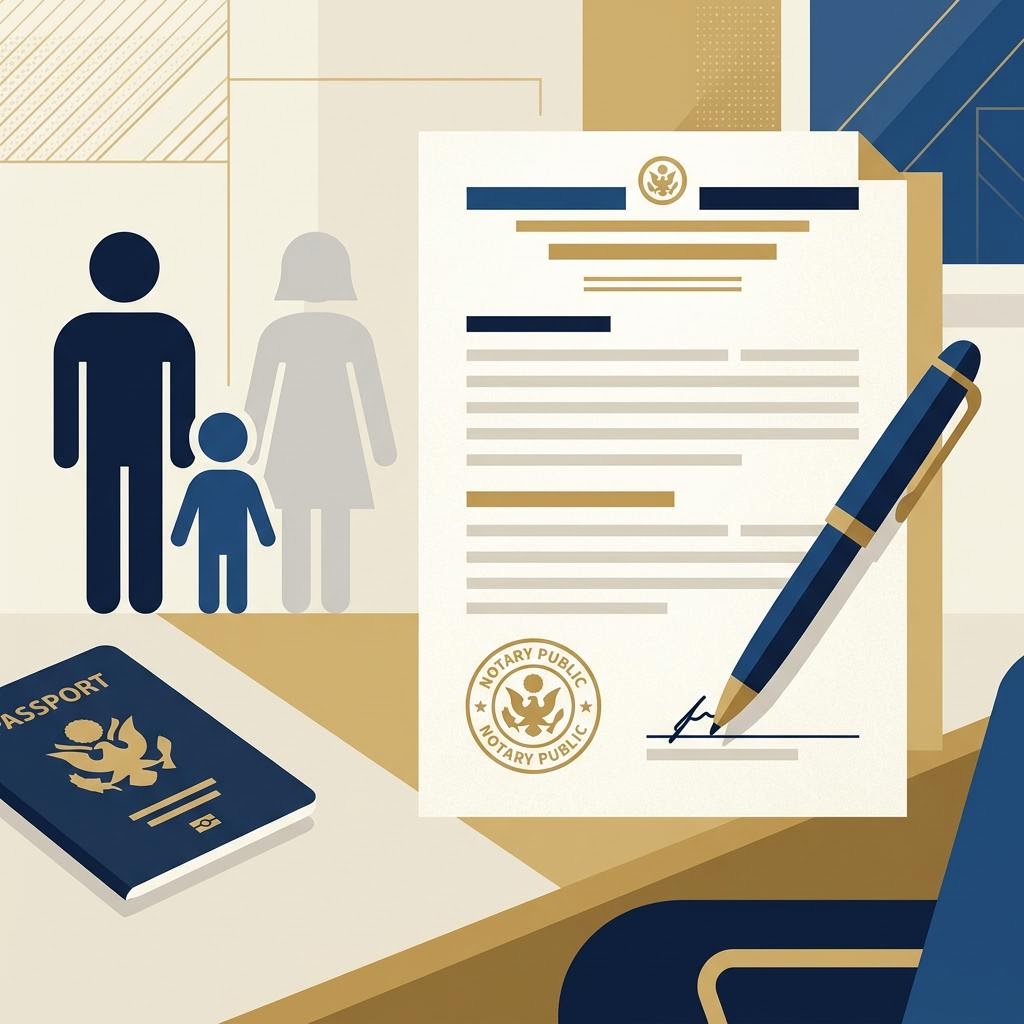
For most U.S. passport applications for children under 16, parental consent is a major part of the process. But what happens when both parents have custody and one parent cannot attend the appointment? That's where Form DS-3053, Statement of Consent, comes in.
What the Non-Appearing Parent Must Do
Current State Department guidance says the parent who cannot appear should:
- Complete Form DS-3053
- Sign and date it before a certified notary
- Provide a photocopy of the photo identification shown to the notary
The parent attending the passport appointment brings these materials with the child's DS-11 application.
Don't Sign It Too Early Without Checking Validity
Consent documents have timing requirements. Check the current Form DS-3053 instructions before the appointment rather than reusing an old notarized form.
What If the Other Parent Cannot Be Located?
DS-3053 assumes the other parent can provide consent. If the parent genuinely cannot be located, a different process involving Form DS-5525, Statement of Special Family Circumstances, may apply.
What If One Parent Has Sole Custody?
Then DS-3053 may not be needed if the applying parent can establish sole authority with acceptable documentation.
Bottom Line
If both parents have custody but only one can attend, prepare Form DS-3053 properly before the appointment.
Use the official U.S. Department of State website for current instructions:
travel.state.gov — Apply for a Child's Passport Under 16Consent-packet checklist for a willing absent parent
DS-3053 documents consent; it is not a substitute for the child’s passport application. The child still applies through the under-16 process. The absent parent should follow the current form instructions and sign and date the consent in front of the appropriate notary, not sign a blank form in advance.
- Include the photocopy of the photo ID presented to the notary.
- Check the child’s details and the consent signature before the appointment.
- Submit DS-3053 and other notarized statements within 90 days after signing or notarization, as the State Department instructs.
- If the parent is abroad, check the U.S. embassy or consulate requirements; do not assume every local notarization will be accepted.
The official page also describes consent when neither parent can appear and evidence when one parent has sole authority. If a parent refuses consent or cannot be located, that is not simply an attendance problem: read the special-circumstances guidance and seek appropriate assistance. Do not alter a notarized form to make an unavailable parent appear to have agreed.
FreePassportSnap.com helps you prepare a correctly sized child passport photo from home — no watermark, no registration.
Create Your Free Passport Photo →Previous
Online Passport Photo Scams and Hidden Charges: What to Check Before You Upload
Next
Passport After Cosmetic or Facial Surgery: Do You Need a New One?
You Might Also Like
Child Passport After Divorce: Which Parent Must Consent?
Divorced parents applying for a child's U.S. passport? Learn when both parents must consent and when a custody order can establish sole authority.
How to Renew Your Child's U.S. Passport (What Parents Need to Know)
Renewing a child's passport is not like renewing an adult's. There's no online option, both parents must consent, and the DS-11 form is required every time. Here's exactly what to expect.
One Parent Has Sole Custody: How to Get a Child's U.S. Passport
Have sole custody of your child? Learn what documents can establish sole authority for a U.S. child passport application.