Child Passport After Divorce: Which Parent Must Consent?
Edited by Bobby Hess | FreePassportSnap.com
Author: FreePassportSnap
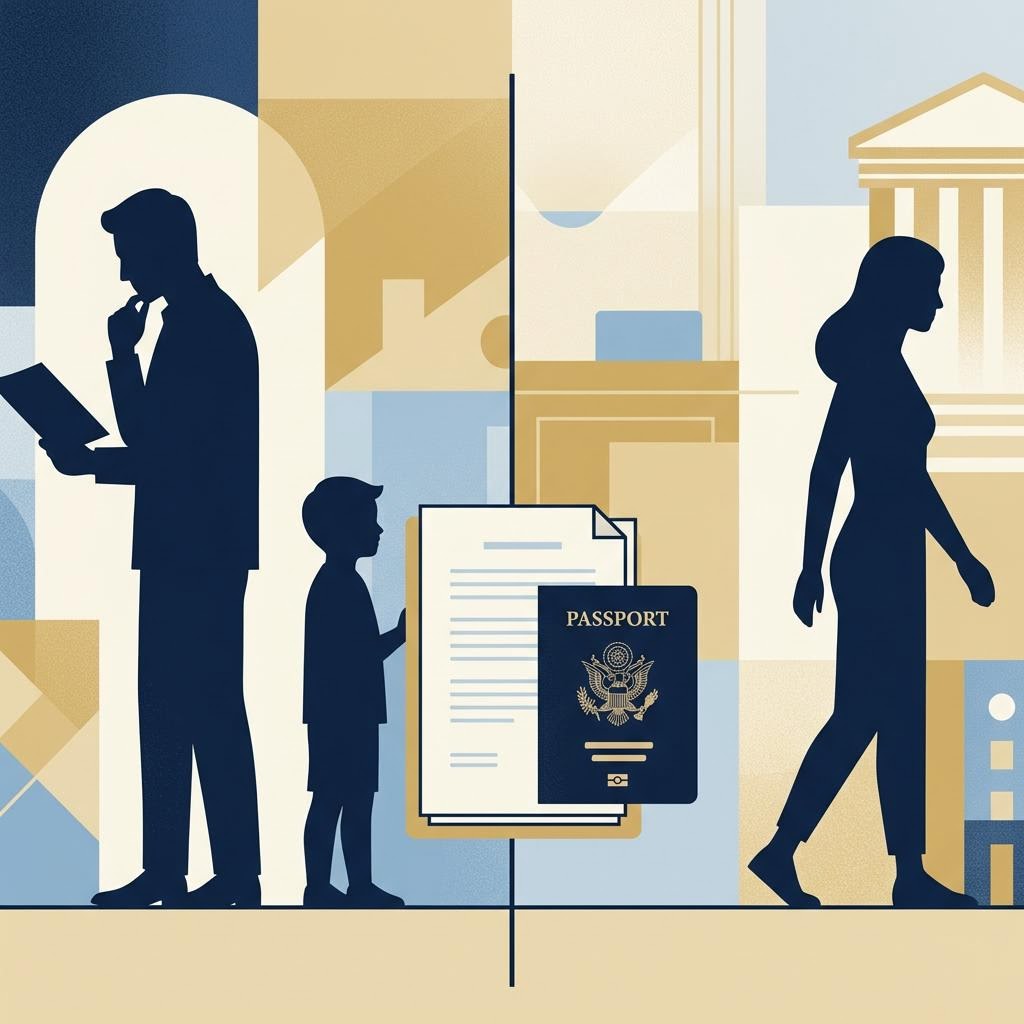
Divorce by itself does not automatically eliminate the other parent's passport rights. For a child under 16, what matters is legal authority — not simply which parent the child lives with most of the time.
Joint Legal Custody
If both parents retain legal custody, both generally need to participate in the child's passport application. If one cannot attend but agrees, Form DS-3053 may be used.
Sole Legal Custody
If one parent has sole legal custody, that parent may be able to establish sole authority by providing the qualifying court order.
The Other Parent Cannot Be Found
If both still have custody but the other parent genuinely cannot be located, Form DS-5525 may be considered in limited circumstances. The State Department may request additional evidence such as a custody order, an incarceration order, or a restraining order.
International Child-Abduction Concerns
Passport rules involving minors are deliberately strict partly because of international parental child-abduction concerns. A parent worried about unauthorized passport issuance can also learn about the State Department's Children's Passport Issuance Alert Program.
Bottom Line
After divorce, don't assume that physical custody alone answers the passport-consent question. Read your legal custody order carefully.
Use the official U.S. Department of State website for current instructions:
travel.state.gov — Apply for a Child's Passport Under 16Match the application packet to the custody arrangement
Start with the current court documents. Divorce paperwork may address residence, legal decision-making and travel separately. For passport purposes, the relevant question is who has authority to consent. If both parents retain custody and one agrees but cannot attend, use the official absent-parent consent instructions rather than asking the attending parent to sign for both.
- If both attend, bring the child and the standard application evidence and identification.
- If one consenting parent cannot attend, prepare DS-3053 and the photocopy of the ID shown to the notary.
- If one parent has sole legal authority, bring the qualifying evidence listed in the official instructions.
- If the other parent cannot be found, review DS-5525 requirements; acceptance is not automatic and further evidence may be requested.
A passport issuance decision and permission for a particular international trip are not necessarily the same legal issue. Check any court restrictions and destination requirements separately. Avoid making nonrefundable plans on the assumption that a divorce decree alone will satisfy the passport application.
Once consent is sorted out, FreePassportSnap.com helps you prepare a correctly sized child passport photo from home — no watermark, no registration.
Create Your Free Passport Photo →Previous
Can You Wear Jewelry or Facial Piercings in a U.S. Passport Photo?
Next
Common Travel Scams to Watch for Before and During Your Trip
You Might Also Like
How to Renew Your Child's U.S. Passport (What Parents Need to Know)
Renewing a child's passport is not like renewing an adult's. There's no online option, both parents must consent, and the DS-11 form is required every time. Here's exactly what to expect.
One Parent Has Sole Custody: How to Get a Child's U.S. Passport
Have sole custody of your child? Learn what documents can establish sole authority for a U.S. child passport application.
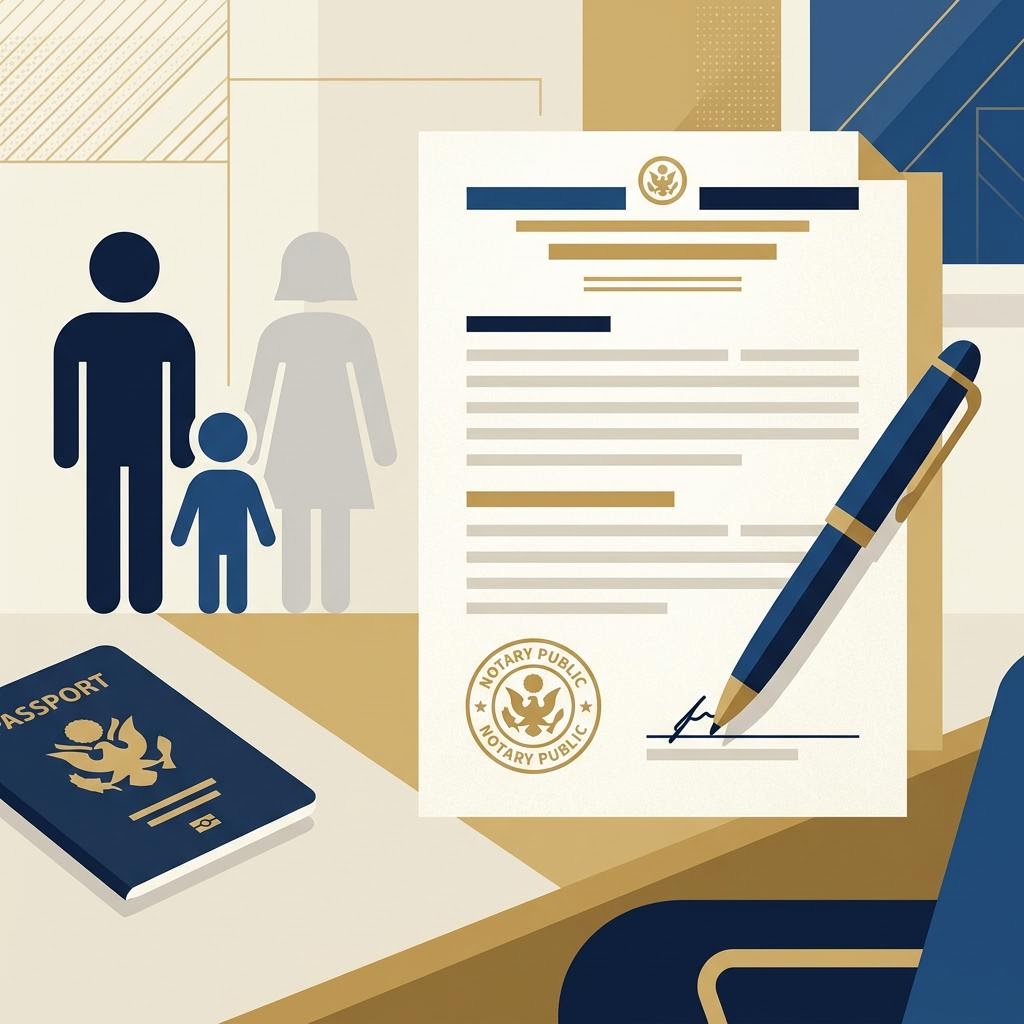
Other Parent Cannot Attend a Child Passport Appointment: How Form DS-3053 Works
One parent cannot attend a child's U.S. passport appointment? Learn how Form DS-3053 works, notarization rules and what ID copy is required.